
*筆者:「一個霹靂呀」?那其實是線上訂房旅遊網站Expedia先前的廣告台詞,有諧音之趣,但現實中,線上訂房旅遊網站(或單純稱之為「網路旅行社」→Online Travel Agency,即OTA)與旅館業之間的糾葛、互利或競爭,那就沒麼有趣了,甚至像連續劇「台灣霹靂火」的火藥味瀰漫其中(Helen馬,待會該妳出場了哦~~ XD)。
 |
| 演到後來,其實一點都不勵志……甚至兒童及青少年不宜,觀眾邊罵邊看的經典~ XD |
如本篇文章所分析,全球旅館業的營運模式已有七十年的歷史卻未能與時俱進或有所突破,而是被迫讓時代拖著走(該不會這就是那些標榜「全球視野」的專業新聞節目所不屑報導相關新聞的原因?! 因為我只看到業配文的報導+飯店人員扮演員的畫面,而當初萬豪酒店併購喜達屋酒店的消息一披露,台灣的新聞台大概只有3~4秒的篇幅……)。不論是萬豪酒店以及雅高酒店集團的併購案,無非都是擴大自己的經濟規模及分眾市場的完整性→規模越大,相對應的議價空間也越大,也是「定價槓桿(pricing leverage)」的操作前提,看似旅館業與OTA相抗衡的時日可以有所冀望。然而,本文確實點出線上訂房旅遊網站與旅館集團之間差異:回應性與靈活性,而這也是旅館業該見賢思齊之處。不然我們該如何打贏或者打平這場仗呢? (筆者的私心立場~~ 😉 )
20 years of OTAs: How they changed the hotel industry
(線上訂房網站二十載:他們是如何改變旅館業)
12 DECEMBER 2016 10:17 AM
HotelNewsNow.com by Ed Watkins
The emergence in the past 20 years of online travel agencies as a distribution partner has had a profound effect on the hotel industry. That relationship continues to grow and change.
做為旅館業經銷夥伴的線上訂房網站(或「線上旅行社」)已誕生二十年,而其早已深刻影響旅館產業。旅館業與線上訂房網站的關係仍持續發展與變化中。
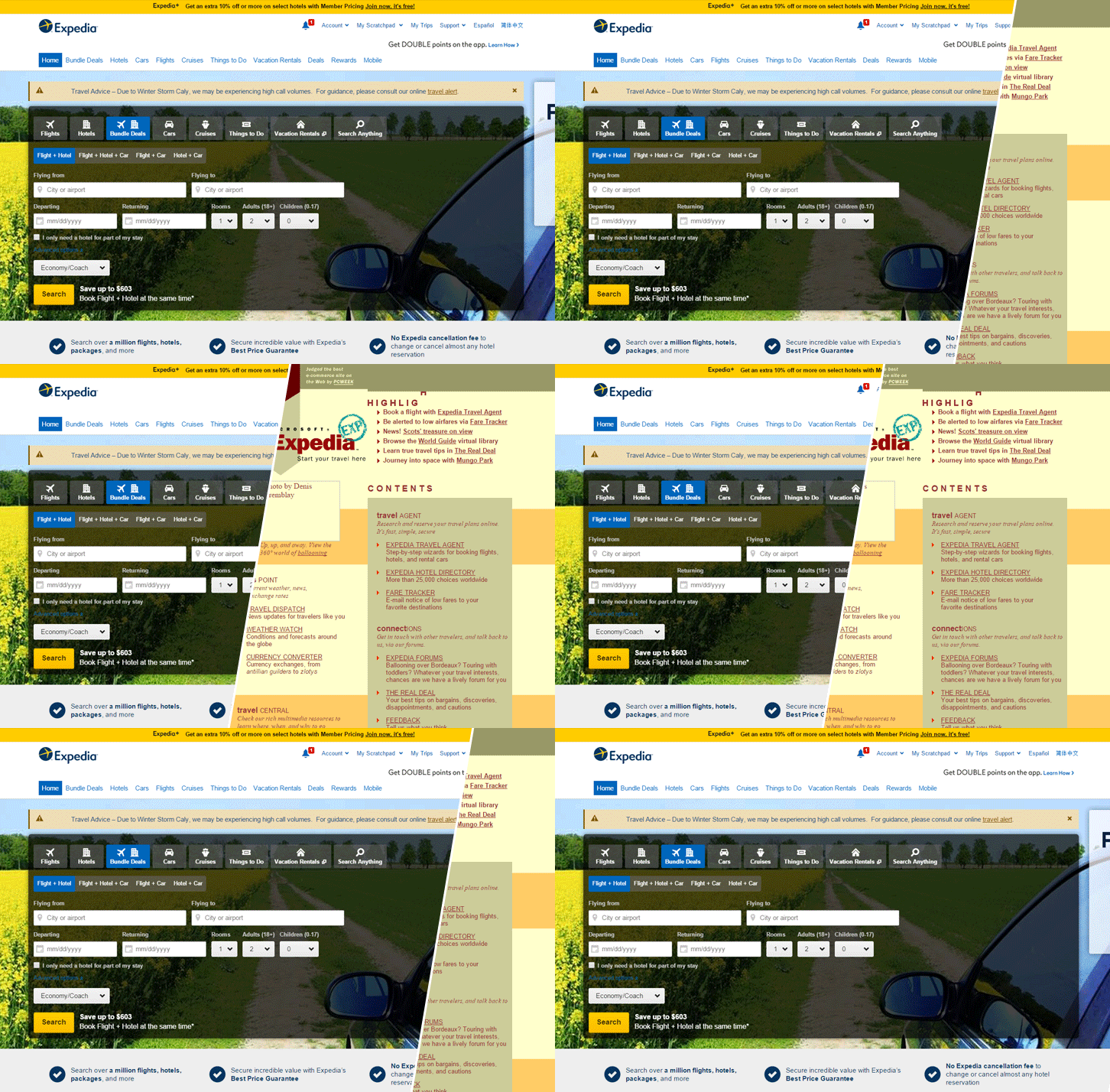 |
| This photo illustration depicts both the current Expedia website (left) and the site when it launched in 1996 (right). (Photo illustration: Annamarie Hudson. Original art: Expedia)(本圖顯示現今Expedia網站 -左側- 以及其最初在1996年推出的原始網站 – 右側-) |
GLOBAL REPORT—In October 1996, Microsoft quietly launched a product that would forever change the way consumers research, plan and book travel, including hotel stays. The effect on the hotel industry of the founding of that first online travel agency, then called Microsoft Expedia Travel Services, has been both profound and often changing.
全球報導 — 1996年十月時,美國微軟公司悄悄推出一個服務產品,而這項產品將徹底改變消費者在搜尋、計劃與預訂旅遊行程(包含旅館房間預訂)的方式。這第一個線上訂房旅遊的網站服務(後來被命名為「微軟Expedia–編按:其字應該是來自於西班牙文 expedía 或法文expédier,意指「發送」或「迅速執行」–旅遊服務」)之創立對全球旅館業產生深刻的影響,並且不斷地改變中。
“While I would include other intermediaries like Google and TripAdvisor, it’s true the emergence of the OTAs has been one of the most significant things to happen in the hotel industry in the past 20 years,” said Mark Lomanno, partner and senior adviser with Kalibri Labs. “It has completely changed our business model.”
Kalibri Labs的合夥人暨資深顧問 Mark Lomanno說:「雖然我可能會把其他如谷歌及TripAdvisor的中介商列入考量,但線上訂房旅遊網站(以下簡稱OTA)的出現確實是全球旅館業在過去二十年間所發生的重大事件之一,因為它徹頭徹尾改變了旅館業的商業模式。」
Some hotel executives see the OTAs’ commission structure as an impediment to profitability, but others believe these intermediaries bring value to the industry.
有些旅館管理者視OTA的佣金規則為自身獲利的阻礙,但同時也有其他人相信這些中介商能為旅館業帶來益處。
“There certainly are some real pluses and real minuses to the OTAs, but to me the pluses outweigh the minuses,” said Robert Rauch, CEO of San Diego-based management company RAR Hospitality. “For one, they have done a phenomenal job of marketing, and they are so far ahead of (the hotel industry) in terms of technology. They also have a tremendous grasp of what’s coming down the pike in social media marketing, channel management and use of the internet. They understand this space better than any hotelier does.”
總公司位於美國聖地牙哥的RAR旅館管理顧問公司,其公司執行長Robert Rauch表示:「線上訂房旅遊網站實際上的好壞互見,但對我而言好處還是大於壞處的。原因之一是他們在行銷這個區塊表現傑出,而且他們目前在科技運用上是領先旅館業的。再者,OTA絶佳掌握住社群媒體行銷、銷售通路管理、網路運用的趨勢。他們比其他任何一個旅館業者來得瞭解透徹。」
Since its launch 20 years ago, Expedia has grown organically and through acquisitions to become the largest OTA in the industry, followed closely by Priceline Group and Chinese-based Ctrip.
Expedia (中文名「智遊網」 或 「億客行」)在20年前推出成立至今,經由併購及有機發展已成為業界最大的線上訂房旅遊網站,而 Priceline集團(旗下品牌有Booking.com)及中國攜程網則分別緊追在後。
The birth of Expedia and subsequent OTAs came as the internet was beginning to penetrate the professional and personal lives of people. But its creation was more than just a function of technology, according to sources.
當網際網路開始滲透至人們的公私生活領域時,Expedia於焉誕生,而隨後許多其他的線上訂房旅遊網站紛起。不過根據資料來源指出,Expedia的創立不僅只於科技上的用途。
“It was a convergence of things,” said Henry Harteveldt, founder and travel industry analyst at Atmosphere Research Group. “Just as Amazon saw an opportunity to sell books online, the early OTA pioneers thought they could take advantage of this new technology and sell travel services online.
Atmosphere Research Group的創辦人暨旅遊業分析者Henry Harteveldt 說:「這是許多事物匯集而成的結果。就像亞馬遜看到線上賣書的機會一樣,早期的線上訂房旅遊網站的先驅業者也認為他們能夠取得網路新科技的優勢,同樣在網路上販售旅遊服務產品。」
“In reality, traditional travel agencies had been engaged in electronic commerce through the (global distribution systems) for decades. So the OTAs simply took that GDS platform, built websites and created a transactional environment. Then they continued to evolve by creating new business models.”
「事實上,傳統旅行社業者早已藉由全球分銷系統(global distribution system,簡稱GDS)從事電子商務數十年。因此線上訂房旅遊網站業者只是採用GDS的平台,建立起自己的網站,並創建自己的交易環境。後來,他們再藉由創建新商業模式持續發展。」
A lifeline during crises(危機中的一線生機)
Several global crises—the 9/11 terror attacks and the recession starting in late 2008—served as springboards to boost the OTAs’ share of hotel distribution.
幾個全球危機(比方像是美國911恐怖攻擊事件與2008年世界金融危機所造成的經濟大衰退)成為促使線上訂房旅遊網站瓜分掉旅館業既有分銷方法的跳板。
“There is no question the acceleration in the number of bookings through intermediaries, and OTAs specifically, was greatly accelerated by each of those downturns,” Lomanno said. “Both times, the industry got caught in a vortex of declining occupancy and demand and declining rates, not knowing how to fill the hotels. With the advent of OTAs came what they believed to be a mechanism that could help drive that business.”
Kalibri Labs的合夥人暨資深顧問 Mark Lomanno說:「 無庸置疑地,經由中介商能加速旅館業者的訂房數量。而線上訂房網站尤其能大幅加快處於頹勢的旅館訂房量。全球旅館業有二次身陷住房需求、住房率及房價下滑的旋渦當中,並且對填滿空房束手無策。而OTA的出現讓旅館業深信那會是幫他們驅動生意的辦法。」
According to Lomanno, prior to 2001, between 1% and 1.4% of rooms were booked through intermediaries; shortly after 9/11, that percentage grew to between 4% and 6%.
根據 Lomanno的說法,在2001年以前,僅1%~1.4%的訂房來自於中介商;很快地在2001年的美國九一一恐怖攻擊事件之後,來自於中介商的訂房比例提高至4%~6%。
“It plateaued until it got to 2007-08, and then there was another big jump,” he said. “Each time there was an economic downturn, regardless of the cause, the percentage of rooms booked through the intermediaries jumped precipitously and then flattened down after that.”
Lomanno接著說:「直到2007、2008年左右,訂房量呈現較高的平穩狀態,之後有另一個巨幅躍升。每當有經濟衰退時期,不論肇因為何,經由中介商的訂房比例都會陡然上升,之後再平穩下修。」
A recent report from Kalibri Labs on hotel distribution indicates that, in recent years, OTAs have gained a 40% share in hotel bookings: In 2011, there was one OTA booking for every 4.3 direct bookings; in 2015, there was one OTA booking for every 2.7 direct bookings.
一份近期來自Kalibri Labs關於旅館業分銷狀況的研究報告指出,近年來OTA已獲得旅館業訂房佔有率的40%:在2011年,每4.3筆直接訂房中才會有1筆OTA訂單;但在2015年,每2.7筆直接訂房中就有1筆OTA訂單。
Michael Tall, president and COO of Charlestowne Hotels, believes the inability of some hotel companies to leverage technology was another reason OTAs were able to rapidly gain share during the recent recession.
Charlestowne酒店的總裁暨營運長 Michael Tall 深信,某些酒店業者無法藉科技讓自身振衰起弊,是讓OTA得以迅速在近年的經濟衰退中獲得訂房佔有率的原因。
“In 2008, it was slightly different (than post-9/11). The (hotel) companies that were positioned with technology were in a better situation than those that were not,” he said via email. “A lot of the brands, as well as the independent hotels that were managed by sophisticated management groups, had the expertise regarding the reach of solid (customer relationship management) platforms, the technology behind their proprietary websites, as well as the tracking systems to measure targeted marketing efforts. Those that were not in a position to manipulate these tools to their advantage turned to the OTAs who did, and their profitability suffered.”
Michael 在電子郵件中表示:「在2008年,事態與後九一一事件時期有些許不同。以科技做品牌定位的業者比起那些什麼都不做的人處於較佳的態勢。許多酒店品牌以及富有經驗的酒店管理集團旗下的獨立酒店已具有以下的專業能力:能擴及至穩固的客戶關係管理平台、有掌控管理其自家網站的科技能力、檢測目標營銷效能的追蹤系統。至於那些尚未有資格熟稔上述專業能力的業者,除了錯失與OTA相抗的優勢,其獲利能力亦受損。」
Harteveldt places some of the blame with hotel brand companies.
Atmosphere Research Group的創辦人暨旅遊業分析者Henry Harteveldt 對於酒店品牌集團有些微詞。
“During the recession in 2008 and 2009, I consistently heard from managers of branded hotels that OTAs were more responsive and easier to work with than many of the brands themselves,” he said. “The brands had limited email marketing capabilities, very rigid processes, very limited targeting capabilities for customers. Many of these hotel managers told me they would call up their brands asking for help and they would hear, ‘We can get you out in our next newsletter in six weeks.’ Meanwhile, within 24 to 48 hours, once they agreed to the business terms, email marketing from the OTAs would go out and the reservations would start to flow quickly.”
他說:「在2008及2009年的全球金融風暴期間,我不斷地從品牌酒店的管理層聽到OTA相較於許多品牌酒店總部是更有回應性而且更容易共事。這些酒店品牌在電子郵件行銷能力有限,工作流程十分僵化,而鎖定目標客群的能力極弱。許多酒店管理者告訴我,如果他們致電酒店集團總部尋求協助,他們通常會獲得如下回應 ─『我們可以將貴酒店的需求在未來六週內以會員新訊的方式刊出』相對同時,在24至48小時內,如果酒店業主同意OTA業者所提供的商業合約所列條款,來自OTA業者的電子郵件行銷服務將很快地發送至其線上會員,而在OTA上架的訂房頁面也很快為酒店帶來訂房量。」
What’s ahead?(那未來可預見什麼?)
Over the years, the OTA sector has grown, consolidated and changed some of its strategies. And other intermediaries and disruptors such as Google, Facebook, TripAdvisor, metasearch sites and Airbnb have further complicated the hotel industry distribution landscape.
幾年來,線上訂房旅遊網站的區塊已成長,並且強化與變更其經營策略。而其他中介業者甚至是破壞者如:谷歌、臉書、TripAdvisor、Metasearch網站及Airbnb已進一步把旅館業分銷的樣態給複雜化。
In the past year, hotel brand companies, including Marriott International, Hilton Worldwide Holdings and others, have launched campaigns to promote direct bookings through their loyalty club programs.
過去一年當中,酒店品牌集團包括萬豪國際集團、希爾頓全球置業集團等已推出相關廣告促使顧客經由其會員計劃直接與酒店集團訂房。
While these book-direct efforts hold the promise of lower guest-acquisition costs, not all hotel executives seem them as a panacea.
雖然這些促使直接訂房的努力能維持住獲得客源的低成本保證,但似乎也不是所有旅館的高層視其為萬靈丹。
“In the short term, the direct book brand initiatives are creating the same problem hotels started to see with the OTAs: the dilution of the net rate to the hotels,” Charlestowne’s Tall said. “The hotels are the ones that suffer when a brand offers 10% or 15% off the lowest rate to their loyalty members, or on their website. When that is rolled up with the other marketing fees, it could potentially be less of a margin for the hotel than from an OTA.”
Charlestowne酒店的總裁暨營運長 Michael Tall 表示:「短期來看,酒店集團的直接訂房舉措還是會產生如同酒店業在看待OTA訂房的同樣問題 ─ 稀釋掉酒店客房銷售的淨價。酒店業主是唯一承受酒店集團在行銷上的後續結果 ─ 當集團對於其忠誠會員或是在官方網站提供最低房價9折或85折的優惠時。而且當優惠價格還加上其他管銷費用時,若拿來與OTA的價格相比,則潛在的差異相去不多。」
He sees hope in the long-term, however, if chains can lure guests back into their proprietary channels and then use pricing leverage to increase rates.
然而Tall 表示在長期看來是樂觀的,如果國際連鎖酒店集團能把顧客吸引回其官方訂房平台,而且在之後採取價格槓桿操作以提高房價。
“The bet is that the ‘cost’ of this campaign will pale in comparison to the gain—time will tell,” he said.
他接著說:「賭注是該舉措的成本是否會比實際獲得的利益來得少 ─ 時間會證明一切。」
Other sources believe Google might emerge as the powerhouse in hotel distribution.
其他的資訊來源則相信谷歌可能以酒店業分銷管道的驅動形式呈現。
“I am concerned for OTAs and hotels alike about what Google could do if it continues to bias search-engine results in favor of Google direct content, whether it is hotel pricing shopping, or Google ratings and reviews, or booking or anything else,” Harteveldt said. “Everybody in the travel space will have to keep their eye on Google because they are so large and so powerful and there is a serious potential threat there.”
Atmosphere Research Group的創辦人暨旅遊業分析者Henry Harteveldt:「我關心谷歌對於OTA與旅館業雙方會有何對應方式,如果谷歌仍舊把搜尋功能的結果偏頗於谷歌直接關聯的內容,不論是旅館最優房價訂購、谷歌上的評分與評價,抑或是預訂之類的東西。在旅遊產業的每個人都必須留意谷歌,因為谷歌實在是規模龐大且功能強大,而且還有潛在的威脅在其中。」
Lomanno of Kalibri Labs sees recent industry consolidation as at least in part a reaction to shifts in the distribution environment.
Kalibri Labs的合夥人暨資深顧問 Mark Lomanno 已看到近期的產業強化,其一部份的原因是對於分銷環境轉型的應變。
“For the hotel industry, the basic operating economic structure is no different than it was 70 years ago. That model has to evolve,” he said. “The hotel industry knows it and that is part of what is driving some of the consolidation, like Marriott buying Starwood. While these companies try to figure out what their operating model is going to be in the next five to 10 years, the short-term strategy is to get bigger and more powerful while you figure out how this world is going to evolve.”
Lomanno說:「對於旅館產業而言,現今基本的營運經濟架構無異於70年前的狀態。如此的模式必須要進化成長。而產業界其實也有自知之明,並導致業界的一些強化或整併狀況,比方像是萬豪酒店集團併購喜達屋酒店集團的案例一樣。雖然這些旅館業者試圖探究出未來五到十年的營運模式,但是當我們要解答出這世界的趨勢走向時,短期策略會是較為強大的方法。」
 派屈克沈的旅館園地