

*筆者:雖然這是廣告編輯類別的文章,但仍有其參考價值。在大規模或集團式的旅館酒店往往採取浮動式的訂房價格,依據訂房需求高低之預測來調整每日房價,而其他獨立或較小規模的旅館飯店則是大部份以固定的年度房價,再搭配特定假期、週末、國際展覽期的特別客房訂價為主,前後者的差異在於前者有機會將收益最大化,後者是工作人員比較方便記憶與報價,至於浮動房價的訂定是否如本文所提使用特定之管理系統亦或是人工調控,這就不一定了。
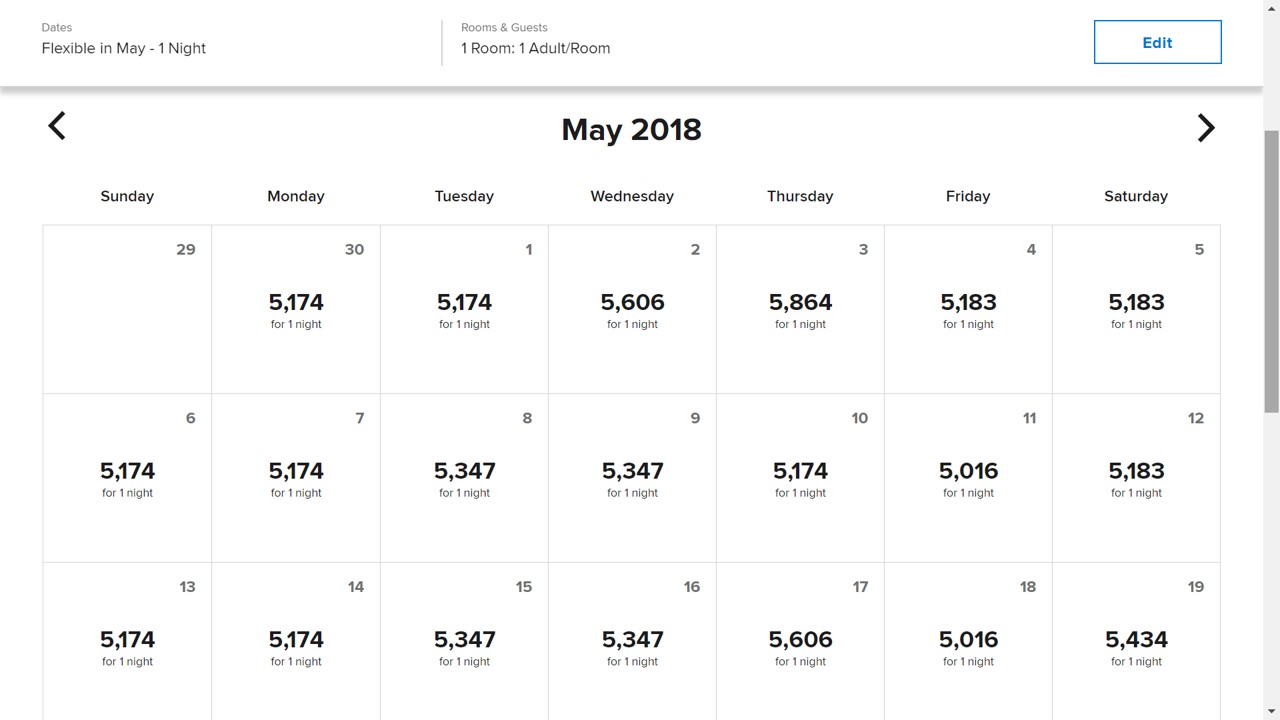 |
| 浮動房價示意圖。隨著訂房日期的不同,入住日期的價格也隨之變動,與預訂機票相似 (圖片來源: 萬豪酒店官網截圖) |
隨著科技的發展,電腦系統可以協助人力操作的部份也越來越多, 至於投資於設備系統的意願,就端視業主的態度而定。Cheers!
5 Revenue Management Questions Independent Hoteliers Should Ask
( 獨立自營的旅館業者應該自問的五個營收管理問題)
2018/03/14 eHotelier.com by Tracy Dong
 Advanced revenue management systems, powered by machine learning, are used by leading hotel brands around the world. However, it can be argued that smaller and independent properties need this technology even more than large hotels, given that limited room volumes mean every pricing decision counts.
由電腦自主學習與分析的先進營收管理系統為國際大型連鎖酒店集團所採用。然而,相對小型與獨立自營的旅館業者反倒比大型酒店集團還來得更需要這項科技,因為有限的客房數讓每個定價決策都會影響到最終營收。
Independent hoteliers often find themselves in challenging situations—they commonly lack the resources to compete with the big, global chains in terms of marketing budgets and investment in third-party booking channels, and they also don’t have the well-recognized brand name to support these activities. In addition to fewer resources, smaller, independent hotels also commonly lack experienced, specialised revenue management in-house talent to drive their pricing strategy. This can result in rooms either being overpriced or underpriced, which ultimately turns guests away or secures guests at a less-than-ideal booking rate.
獨立自營旅館酒店業者常感到身處威脅挑戰當中 ─ 就行銷預算與投資在第三方訂房平台的方面來說,他們通常缺乏資源與國際大型連鎖酒店集團比拼,而且也沒有辨識度高的品牌名稱以支持這類的行銷活動。除了可動用的資源少之外,規模較小的獨立自營旅館酒店也通常缺少內部有經驗及專門的營收管理人才來推動訂價策略。這樣的狀況會導致客房價格在訂價上過猶不及,不是把顧客推送給其他競爭者,就是用低於理想的訂房價格來留住顧客。
Machine-learning innovations paired with high mobility, prescriptive analytics and transparent business intelligence enable independent hoteliers to unlock new profits. Even with all the advancements to date, however, many independent properties still rely on limited processes and technology—to the detriment of their productivity and bottom-line revenues.
具有高行動力、指導性分析及一目了然的商業智能的機械學習創新能讓獨立自營的旅館酒店業者開啟新的獲利模式。然而,即便有了最新發展的工具,許多獨立自營的業者仍舊仰賴有限的方法步驟與科技 ─ 這樣會有損於其生產力與營收底線。
The issue all independent hoteliers need to address is whether their pricing strategies and revenue management systems are adequately supporting their drive to profitability and business growth. To help, here are five questions to consider:
所有獨立自營的旅館業者都該談談的課題是,他們的訂價策略及營收管理系統是否適當地支持去推動獲利與營運成長。為了協助這方面的問題,茲提供五個問題做為思考方向。
Are you still uploading your rates?
(您還有在更新客房售價嗎?)
With their day-to-day responsibilities, hoteliers often have limited time for strategy—especially if they’re manually managing rates. Technology requiring manual maintenance and implementation of rate recommendations forces users to be less nimble to market shifts, limits time and resources and hinders productivity. Automated pricing and inventory decisions, on the other hand, continually optimize and automatically deploy to integrated selling systems. This gives time back in the day to enable focus where it’s needed—on strategic opportunities.
旅館酒店業者每天都有既定的工作職務要完成因而經常僅有限的時間規劃營運策略 ─ 尤其如果他們是以人工方式管理房價的話。需要以人工方式維護及執行建議價格的技術使得業者被迫對於市場變遷較無法靈活變通,並且限制了能運用的時間與資源以及阻礙了生產力。另一方面,自動化的訂價與客房庫存決策能持續地優化與自動設定所整合的銷售系統。這使得每日可用的時間重回手中,並能讓業者專注於必要之處─ 策略上的機會。
Do you manually manage guest room inventory?
(您用人工管理客房庫存?)
Hotels have managed inventory through manual controls for decades, but compared to 10 years ago, most revenue technology providers haven’t improved these fixed controls at all. The most advanced technology, however, uses its analytics to deploy an automated inventory strategy that not only improves profits, but productivity as well. A hurdle is a value assigned to a particular day that optimizes the available demand in the market.
旅館酒店業者數十年來都以人工手動的方式調控客房庫存,然而就算反觀於十年前,大部份的營收科技服務業者也完全未改進這固定調控方式。然而,最先進的科技運用其分析以規劃出全自動的客房庫存策略能增進獲利與生產力。不過,困難之處在於充份運用特定日的可得市場需求之數值。
This analytically-derived value helps determine the optimal business to accept and maximizes shoulder-night performance so longer length of stays aren’t turned away over high-demand nights. Hoteliers can thus optimize rate availability through channels like voice reservations, booking engines and OTAs.
這經由分析獲致的數值能幫助業者決定最佳的客房訂單並進而接收與擴大化中等訂房需求期間的績效表現,因而較長住宿天數的客人就不會在訂房高峰期轉單改住其他旅館酒店。如此,旅館業者能藉由電話與線上訂房服務及線上訂房旅遊平台等訂房管道讓最適房價能充份運用。
Does your pricing structure have limitations?
(您的訂價結構有侷限?)
The ultimate goal of a revenue strategy is to drive profitability. The challenge lies in pricing different rooms, through different channels, across different days, to different guests. With unique demand for room types, revenue technology needs to support different buying behaviours by analytically-determining ideal prices, inventory controls and overbooking strategies for different room types. If rates are managed independently from inventory controls, profits end up sacrificed in the process.
營收策略的終極目標在於導致獲利。然而要能獲利的挑戰在於變數很多:要為不同房型訂價,經由不同的訂房管道,不同時期與日期之間以及針對不同客群進行銷售。因房型而來的獨特需求,營收管理科技需要針對不同房型藉由分析決定理想的客房售價、客房庫存調控、超額預訂策略來對應不同的消費行為。假若房價是從客房庫存調控的面向來個別管理,則獲利會在預訂過程中以損失作結。
Do you cross your fingers while changing rates?
(您會在變更房價時自求多福嗎?)
Today’s predictive analytics allow users to understand the impacts of their decisions before they even make them. Scenario analysis in automated revenue technology allows hoteliers to explore the outcomes of potential rate changes, or if guest behaviour differs from their current expectations. This capability also helps hoteliers learn how sensitive their technology is to changes in inputs. Utilizing this feature is quick and easy, allowing hoteliers to experiment more to understand how and why pricing and availability decisions are made in a very intuitive way.
現今的預測分析進展到能讓使用者在下決策前就可以先了解每個決定所帶來的後果與影響。自動化營收管理技術的情景分析讓旅館業者得以發現因可能的房價變動所導致的結果,或是發現顧客會因當前的期望不同而導致不同的消費行為。這樣的功能同時也能讓業者學到該項科技敏銳程度並因而變更原先所設定的房價。使用這項特色功能既快速且容易,並讓業者能多加測試以相當直觀的方式了解訂價與客房庫存決策是如何進行與原由。
Are you forecasting with the wrong data?
(您預測住房狀況引據失當嗎?)
Like larger hotels, small, independent properties are constantly generating data—such as that used in developing demand forecasts. Hotel data comes from a multitude of sources, changes rapidly and is critical for proper pricing decisions. A good forecast as part of an ongoing revenue management program can assist room-rate decision-making, staff allocation, property maintenance and a range of critical hotel operations. Using data and analytics from an accurate forecast is the best way to determine marketing and pricing strategies for the future, but for the best outputs, hoteliers need the best inputs. This means that more than anything, data quality matters. As the industry continues to leverage evolving data sources, hotels must be thoughtful about the data used within their technology and business strategies. While we live in a world where “more” equates itself with “better,” that’s not always the case when it comes to data.
如同大型連鎖酒店一樣,小規模以及獨立旅館酒店業者也日復一日製作表單數據 ─ 比方像是用在營運發展上的需求預測。旅館使用的數據來源甚廣、變動劇烈,並且對於適當的訂價決策至關重要。持續性營收管理規劃的預測功能若做得好,就能協助房價決策、人力安排、硬體維修保養以及一系列重要的旅館營運事項。從精確的預測報告來運用當中的數據與分析是決定未來行銷與訂價策略的最佳方法,不過,最佳輸出數據的果需有輸入最精確的資料為因才行。意即,數據品質首重於一切。由於旅館產業持續擴大所需參酌的數據來源,業者必須對於使用在科技與商業策略上的數據要考慮周全。我們身處在一個「多即是好」的世界中,但談到數據資料的運用,可就沒有總是同理可證了。
Advanced revenue management systems are best viewed as an investment in an essential business technology platform for independent hotels. The insights, efficiencies and operational benefits are significant, driving measurable performance as well as profitability. Today, all independent hoteliers need to ensure that their approach to revenue management, and the systems they have in place, are driving better revenue performance, not holding them back.
先進的營收管理系統對於獨立營運的旅館酒店而言,是一項值得投資的基本商業科技系統平台。管理系統所提供的觀點、效率及營運上的利益是影響重大的,導向可量測的績效表現以及獲利。現至今日,所有獨立自營的旅館業者都需要確保他們在營收管理的方法與營運現場所採用的系統都導引至更好的營收表現而非抑制退縮。

About the author
Tracy Dong is the Lead Advisor, APAC, at IDeaS Revenue Solutions.
 派屈克沈的旅館園地